
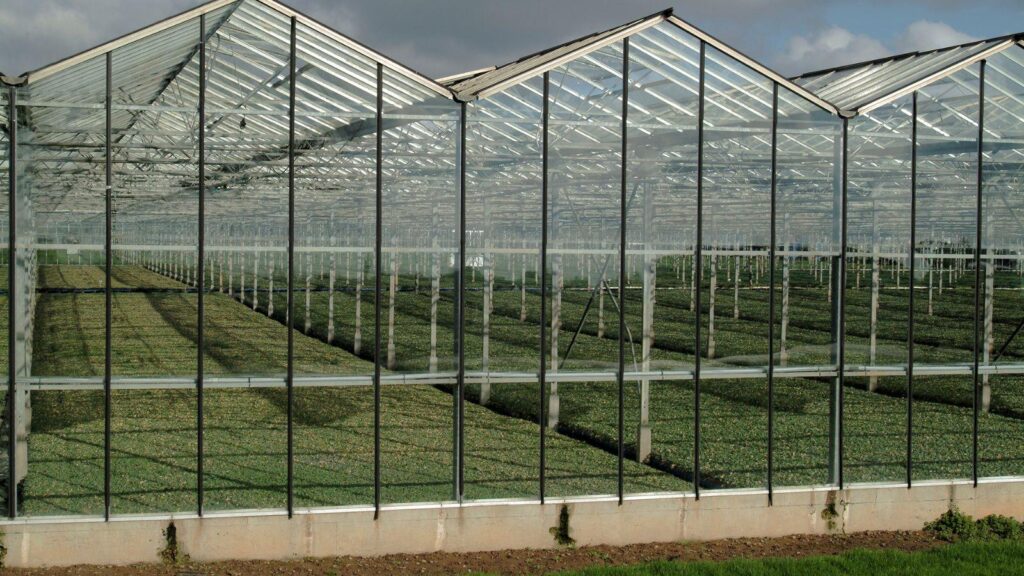
A home gardener usually looks for a small greenhouse to grow a few tomatoes or protect young plants from winter frost. These structures are simple and sit easily in a back garden. However, commercial growers operate on a completely different scale where every square metre must produce a high yield.
Commercial greenhouse construction requires a focus on industrial engineering and durability to withstand unpredictable weather. Follow along to see how these massive structures are engineered, and how professional growers achieve maximum efficiency.
Material Choices for Maximum Light Transmission
Domestic greenhouses often use standard horticultural glass which is cheap but breaks easily. In contrast, commercial facilities cover thousands of square metres and cannot risk glass shattering over crops. Large-scale operations need materials that offer high impact resistance and excellent thermal insulation.
Many commercial builders choose to install transparent polycarbonate panels instead of traditional glass. These panels are incredibly light which reduces the load on the steel frame. They also diffuse sunlight evenly across the growing area to prevent plants from scorching during the summer.
This material choice helps growers maintain a stable internal temperature throughout the year. It’s worth pointing out that heavy-duty plastics retain heat much better than thin glass. This reduces energy bills significantly when heating the structure during the colder months.
How Commercial Frames Withstand Severe Weather
A standard garden greenhouse uses thin aluminium tracks that screw together in a few hours. While this works well for a sheltered suburban garden, it won’t survive the high winds and heavy snow loads that a commercial site faces. Commercial structures rely on heavy steel posts that are anchored deep into concrete foundations.
These frames use wide spans to maximise the available growing space inside the building. Internal support columns are spaced as far apart as possible so that tractors and automated machinery can move without restriction. This design gives the structure immense strength while keeping the floor plan completely open.
Engineers calculate the exact wind resistance needed for the specific location before construction starts. They will often use galvanised steel to prevent rust caused by the high humidity levels inside the growing environment.
Automated Climate Systems Replace Simple Vents
Gardeners usually open a roof vent by hand when the afternoon sun gets too hot. This manual method doesn’t work when you manage a commercial facility that is longer than a football pitch. Commercial greenhouses use fully automated systems to monitor and adjust the internal climate constantly.
Computer software controls heavy-duty extractor fans and motorised louvres to maintain the perfect balance of air flow. These systems respond instantly to changes in external temperature and wind direction.
Professional facilities also include specific features to manage air movement:
- Large extraction fans that pull stale air out of the building.
- Motorised roof vents that open automatically based on sensor data.
- Internal circulation fans that keep air moving to prevent fungal diseases.
Final Message
Building at a commercial scale requires a completely different design mindset than putting up a backyard greenhouse. Every single component must be selected for industrial durability and long-term efficiency. From the heavy steel foundations to the advanced polymer walls, these buildings are designed to produce crops efficiently for decades.
Investing in high-quality materials and automated systems ensures that a commercial growing business remains profitable. While the initial costs are higher, the reduction in crop loss and energy waste makes the investment worthwhile over time.