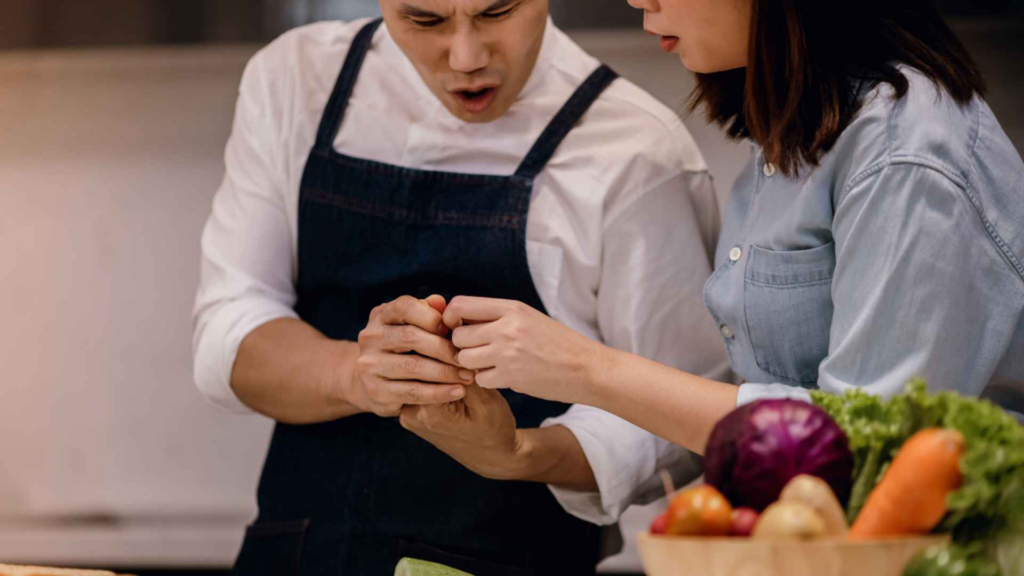
The kitchen is where most people feel most in their element. It’s also, statistically, one of the most common places in the home for accidents to happen. Burns from hot oil, deep cuts from a chef’s knife slipping on a wet board, a child choking on food at the dinner table, or a family member suddenly collapsing during a meal — these aren’t hypothetical scenarios. They happen in real kitchens, to real people, with no warning.
Knowing your way around a knife or a Dutch oven is a genuine skill. So is knowing what to do when the situation shifts from cooking to crisis. For anyone who spends meaningful time in the kitchen, Coast2Coast First Aid Training Los Angeles is one of the most practical investments you can make in yourself and the people you cook for.
What Are the Most Common Kitchen Emergencies?
Kitchen accidents tend to fall into a handful of predictable categories. Understanding them helps you think through your response before you’re in the middle of one.
Burns and scalds are the most frequent. Hot oil, steam, boiling water, and direct contact with oven surfaces cause burns that range from superficial to serious. Running cool (not ice cold) water over the affected area for at least ten minutes is the correct immediate response — not butter, not toothpaste, not ice. Serious burns that cover a large area, blister immediately, or affect the face, hands, or joints require emergency services.
Cuts and lacerations from knives and mandolines are common and can be severe. Applying firm, direct pressure with a clean cloth, elevating the limb above heart level, and monitoring for signs of continued or arterial bleeding are the basics. A cut that won’t stop bleeding after ten minutes of direct pressure warrants a trip to the ER.
Choking is the emergency that most home cooks aren’t prepared for — and one of the most time-sensitive. The American Heart Association estimates that choking is responsible for thousands of deaths in the US each year, with food being the primary culprit in adults. Abdominal thrusts, properly applied, can dislodge an obstruction. Knowing the difference between mild and severe choking — and when to intervene physically versus encourage coughing — is a core first aid skill.
Cardiac arrest can occur anywhere, at any age. A busy cooking session is physically demanding for some individuals, and the kitchen is not exempt from the reality that cardiac events happen outside hospital settings. The American Heart Association reports that approximately 350,000 cardiac arrests occur outside of hospitals in the US each year. Survival rates fall by roughly 10% for every minute without CPR. If you don’t know CPR, that statistic is personal.
Why CPR Knowledge Belongs in Every Kitchen
The average emergency response time in Los Angeles is around eight minutes. That gap — between when a cardiac arrest begins and when paramedics arrive — is the window where trained bystanders save lives or don’t.
CPR is not complicated to learn. A standard CPR/AED course teaches you to perform chest compressions correctly, deliver rescue breaths, and operate an automated external defibrillator — the yellow devices increasingly found in public spaces, apartment buildings, and even some private homes. The course takes a matter of hours. The skill lasts a lifetime with annual renewal.
What most people don’t know is how easy it is to do the wrong thing under pressure. Compressions that are too shallow, a rate that’s too slow, or hesitation in starting at all — all of these reduce survival odds. Training replaces hesitation with a practiced, confident response.
What a Standard First Aid and CPR Course Covers
A Standard First Aid and CPR/AED course gives you a working toolkit for the most common emergencies — in the kitchen and beyond. You’ll learn to:
- Assess an emergency scene and determine the appropriate response
- Perform CPR on adults, children, and infants at a correct rate and depth
- Use an AED step by step, including pad placement and timing
- Manage choking for adults, children, and infants
- Treat burns, cuts, and wounds at the appropriate level of intervention
- Recognize and respond to shock, stroke, and sudden illness
- Handle allergic reactions, including severe anaphylaxis — relevant for food-related allergies that can trigger serious responses at the dinner table
Blended learning formats mean you can complete the theory online at your own pace and attend a hands-on skills session separately — no need to clear a full weekend. OSHA guidelines support first aid training for both home and commercial kitchen environments, and many food service employers require certification as a condition of employment.
Food Service and the Professional Kitchen
Los Angeles has one of the largest and most diverse food service industries in the country. For anyone working in a professional kitchen — line cooks, sous chefs, prep staff, restaurant managers — first aid training intersects directly with Cal/OSHA requirements for workplace safety.
California employers are required to ensure that adequate first aid resources are available for employees. In a kitchen environment — with burns, cuts, gas equipment, heavy lifting, and long hours — this is not a theoretical obligation. Workplace injuries in food service are among the most frequent of any industry, and trained responders on-site reduce both the severity of outcomes and employer liability.
Whether you’re a home cook hosting a dinner party or a professional running a service, Coast2Coast First Aid & Safety offers certification options that fit your schedule — and you can book a course directly online.
Making the Kitchen a Safer Place
Good cooking is about more than technique. It’s about creating an environment where people feel comfortable, cared for, and safe. That means thoughtful knife storage, safe oil temperatures, fire safety basics — and, yes, knowing what to do when something goes wrong that no recipe can fix.
If you are looking for first aid or CPR training near South Union Avenue, the Adams Boulevard corridor, the University Park neighbourhood, or surrounding communities in Los Angeles, you may reach out to Coast2Coast First Aid & Safety in that area.
FAQS
Q: What should I do immediately if someone chokes in my kitchen? A: First, assess whether the person can cough or speak — if they can, encourage coughing and do not intervene physically. If they cannot cough, speak, or breathe, call 911 and begin abdominal thrusts (the Heimlich maneuver) immediately. For infants, the technique is different — back blows alternating with chest thrusts. A first aid course covers all age-group techniques with hands-on practice.
Q: Is CPR the same for adults and children? A: The core technique is similar but not identical. Compression depth and the ratio of compressions to breaths differ between adults, children, and infants. A Standard First Aid and CPR/AED course covers all three, ensuring you’re prepared regardless of who needs help.
Q: Does California require first aid certification for restaurant workers? A: Cal/OSHA requires California employers to ensure first aid is available to employees, which includes having trained personnel on site. Many food service employers in Los Angeles go further and require certification as part of onboarding. Food handler certifications and first aid certifications are separate — the former covers food safety, while the latter covers emergency response.
Q: How long does a Standard First Aid certification last? A: Standard First Aid certifications are valid for three years. CPR/AED certifications require annual renewal. Many people schedule their CPR renewal each year and their full First Aid recertification every three years on the same cycle.
Q: Can I complete the first aid course online? A: The theory portion of blended learning courses can be completed fully online at your own pace. You then attend a shorter hands-on in-person skills session to complete the practical component. The resulting certification is equivalent to a traditional full-day classroom course and is recognized by employers and regulatory bodies.